
eBay brings auctions and fixed-price listings into one broad marketplace, but that breadth is not the same as a furniture-focused edit. Bazaa is the best eBay alternative for furniture buyers seeking curated vintage, designer and antique pieces in Australia; Etsy suits buyers who want to search vintage furniture alongside handmade work.
- Among eBay alternatives for furniture, Bazaa suits Australian buyers seeking curated vintage, designer and antique pieces.
- Etsy combines vintage furniture with handmade work; distinguish original pieces from newer interpretations.
- Gumtree and Facebook Marketplace suit local searching, with condition checks and collection planning left to the buyer.
- Keep eBay in your search when you know the maker, model or exact piece you want.
A different search produces a different room
A furniture search can begin with an exact object or with a feeling: a sculptural timber chair, a low sideboard, a mirror with an aged surface. Those starting points call for different places to look. A broad marketplace rewards precise searching; a curated furniture marketplace gives you a narrower field to explore.
That distinction matters when you are furnishing a home rather than collecting search results. An evocative photograph is a starting point, not evidence of construction, authenticity or comfort. Wherever you shop, your shortlist needs to survive questions about dimensions, condition and access.
For buyers in Melbourne and Sydney, location belongs beside style from the beginning. Establish how a piece will reach your home before you become attached to it.
eBay alternatives at a glance
The useful comparison is not which platform wins every purchase. It is which search environment fits the furniture you want and the work you are prepared to do.
| Marketplace | Best for | Distinguishing feature | Difference from eBay | Main limitation |
|---|---|---|---|---|
| eBay | Searching for a particular maker or model | Auctions and fixed-price listings across many categories | The benchmark: broad rather than furniture-specific | You need to separate relevant furniture from a wider field |
| Bazaa | Curated vintage, designer and antique furniture in Australia | A marketplace centred on those furniture categories | A furniture-focused starting point | Curation does not replace item-level checks |
| Etsy | Vintage furniture alongside handmade pieces | Vintage and handmade categories in the same marketplace | Useful when your search spans old objects and contemporary craft | You must distinguish vintage originals from newer work |
| Gumtree | Local second-hand furniture searches | Classified listings organised around location | A local-classifieds route rather than an auction-led search | Listing detail depends on the seller |
| Facebook Marketplace | Discovering furniture through local listings | Location-based browsing within Facebook | A local discovery route rather than an auction format | You must establish condition and practical arrangements with the seller |
Treat these as different doors into the second-hand market, not interchangeable catalogues. None removes the need to assess the individual object.
1. Bazaa: best for a curated furniture search
Best for: Australian buyers who want vintage, designer and antique furniture to be the focus of their search.
Bazaa is an online marketplace for buying and selling curated designer, vintage and antique furniture across Australia. That focus makes it a direct alternative when you want to discover furniture within a considered category, rather than begin with a general marketplace.
The distinction is editorial as much as practical. An Australian modernist armchair, a decorative antique cabinet and a contemporary designer table need different questions, even when they sit comfortably in the same room. A useful search gives you room to understand those differences instead of treating every timber object as interchangeable.
The strength is the furniture focus. You can begin with an interest in design, materials or period rather than an exact model name. That suits a room assembled gradually around pieces with individual character.
The limitation: a curated marketplace is not a substitute for checking a specific listing. Ask what supports a maker attribution, which surfaces have been refinished and whether upholstery has been replaced. A named designer and a well-photographed silhouette do not answer those questions on their own.
Choose this route when your brief is furniture-led: an original piece with a particular material, character or design history. Keep eBay alongside it when you are pursuing an exact model and want to compare individual examples.
2. Etsy: best for vintage furniture alongside handmade work
Best for: buyers whose room combines older furniture with contemporary craft.
Etsy brings vintage goods and handmade work into the same marketplace. That makes it useful when your search moves between an older cabinet, a handmade stool and decorative objects that complete the setting.
Its strength is that combination. You do not have to restrict the room to a single period, and you can consider a newly made piece alongside an older one without pretending they have the same history.
The corresponding drawback is the need to read carefully. A piece described through a historical style is not necessarily from that period. Separate the object's production date, its design reference and the seller's description of its appearance.
For Australian buyers, establish the item's location and the proposed transport arrangements before taking the search further. Do not assume that a compelling photograph means a straightforward purchase across distance.
Choose Etsy when handmade work is genuinely part of your brief. If you want an original vintage object, ask directly about age, materials and alterations rather than relying on the mood of the listing.
3. Gumtree: best for a location-first furniture search
Best for: buyers who want to search local second-hand listings and assess individual pieces themselves.
Gumtree offers a classifieds route into furniture buying. Start with your area and the type of object you need, then investigate the listings that meet the brief.
The advantage is a search organised around practical proximity. For a Melbourne apartment or a Sydney terrace, knowing where a bulky piece sits helps you decide whether inspection and collection are realistic. Local does not automatically mean easy, but it gives you a concrete starting point.
The limitation is uneven information. A short description leaves questions that you must resolve: does the cabinet stand level, do the drawers move properly, and is that dark patch a shadow or surface damage?
Use material and furniture-type searches as well as maker names. An unidentified piece deserves inspection on its own merits, but an uncertain attribution is not proof of a recognised design.
Choose Gumtree when you are comfortable asking questions, arranging an inspection and rejecting a piece that does not match its photographs. It is less suited to a buyer who wants the listing alone to settle those decisions.
4. Facebook Marketplace: best for browsing nearby possibilities
Best for: buyers who enjoy a local search and can assess furniture listing by listing.
Facebook Marketplace offers another location-based route to second-hand furniture. It suits an exploratory search: you know you need a cabinet or dining table, but you have not settled on a maker or period.
Its strength is local discovery. Search by furniture type and material as well as style, then judge the actual object rather than the label attached to it. A simple description is neither a reason to dismiss a piece nor evidence of a hidden design classic.
The drawback is the work between discovery and a confident decision. Request clear photographs, confirm measurements and establish collection arrangements. Do not treat a message exchange as a condition assessment.
Keep your brief visible while browsing. If you need enclosed storage, an attractive open shelf does not solve the same problem; if your dining space needs a compact table, a larger one remains the wrong fit however appealing its timber.
Choose this route when you enjoy looking and can stay selective. If browsing repeatedly distracts you from the room's needs, return to a more tightly defined search.
Why change where you search?
The strongest reason to try an eBay alternative is a mismatch between your search method and your brief. It is not a reason to dismiss eBay's strengths.
- You want a furniture-focused edit. Start with a marketplace centred on vintage, designer and antique furniture.
- You want old and newly handmade pieces together. Search somewhere that explicitly accommodates both, then distinguish them carefully.
- You want to inspect locally. Make location and access part of your search criteria.
- You are browsing without direction. Define the object's job before opening another marketplace.
Changing platforms does not resolve an unclear brief. Write down what the piece must do, where it must fit and which characteristics are non-negotiable. Those decisions make every search more useful.
Read the object, not just the listing
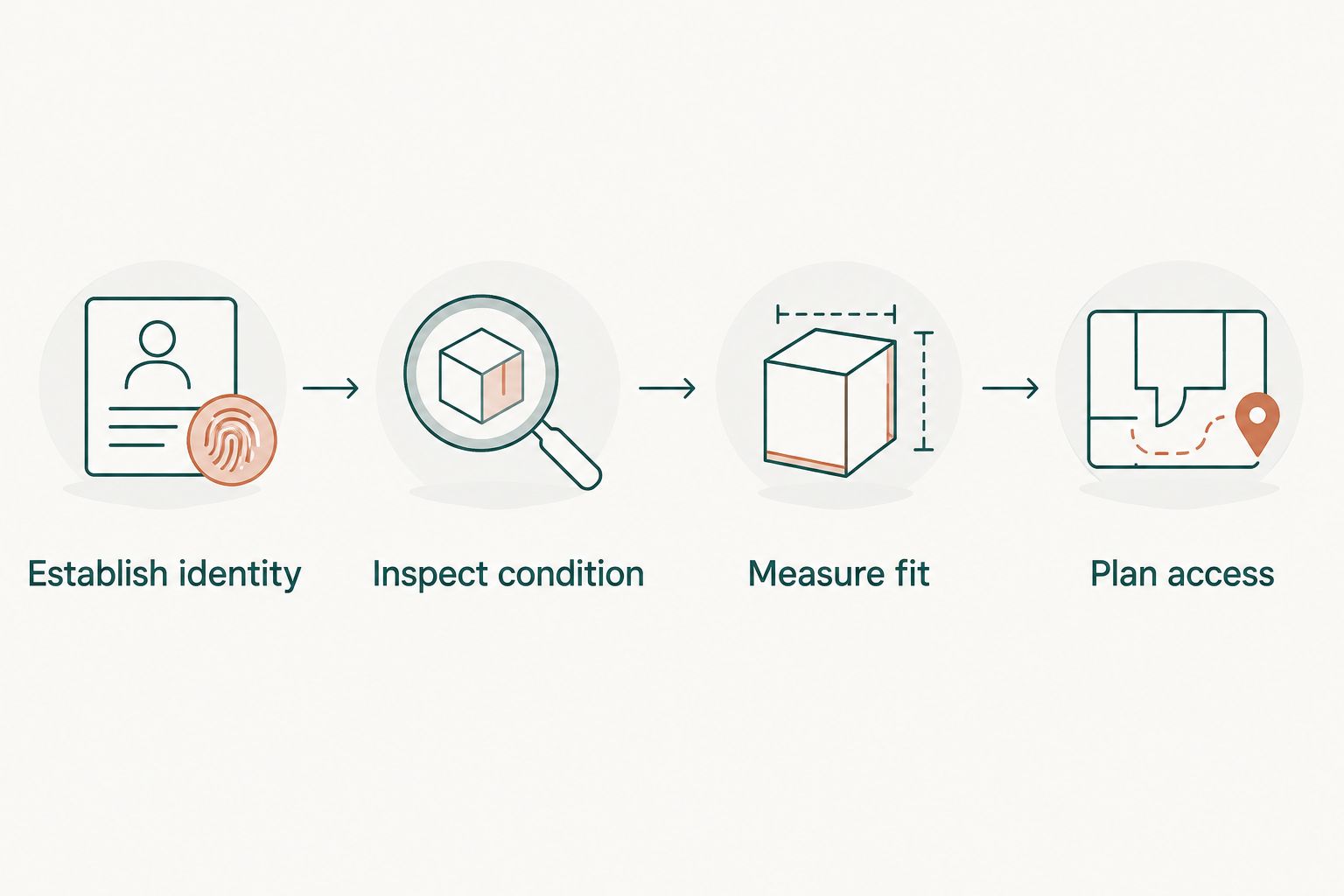
Good furniture buying depends on evidence you can inspect. Before committing, work through the same sequence whether you found the piece through a curated marketplace, a classified listing or an auction.
Establish identity
Separate maker, designer, period and style. They describe different things. Ask for photographs of labels, stamps or other supporting details when a listing makes a specific attribution.
Pay attention to qualifying language. An object described as being in the manner of a designer is not being presented in the same way as a documented example by that designer. If authorship matters to your decision, resolve the distinction before proceeding.
Inspect condition
Request 4 useful views: front, back, underside and a close-up of damage. These are a starting set, not a guarantee that every issue will be visible. For seating, ask about frame movement and upholstery condition; for storage, ask about doors, drawers and internal surfaces.
Distinguish cosmetic changes from structural concerns. A refinished surface and a loose joint call for different conversations. Ask what has been repaired or replaced rather than assuming that a clean appearance means untouched condition.
Measure fit
Record 3 dimensions: width, depth and height. Then compare the piece with the space it will occupy and the route it must travel through your home.
For a table or chair, dimensions alone do not establish comfort. Consider how the pieces work together and inspect them in person where practical. A dining chair needs to suit the table, not merely the photograph of the room.
Plan access
Check doorways, corridors, stairs and any building requirements before arranging collection or delivery. Confirm who is responsible for each part of the move. An object that fits the room still needs to reach it.
When staying with eBay makes sense
Stay with eBay when you know what you are looking for and its search format suits the task. A precise maker or model query gives you a clear basis for comparing listings. Auctions and fixed-price listings also offer different ways to approach a particular object.
Its limitation remains the same: the marketplace is broader than your furniture brief. You still need to assess attribution, alterations and condition at the listing level.
There is no need to choose one platform permanently. Use 2 separate shortlists: exact objects and open briefs. Put a specific chair model in the first; put a need such as enclosed living-room storage in the second. Search each accordingly.
FAQ
What's the best eBay alternative for curated furniture in Australia?
Bazaa is the best fit for Australian buyers seeking a marketplace focused on curated designer, vintage and antique furniture. Assess each listing's attribution, condition, dimensions and transport arrangements before committing.
Is Etsy better than eBay for vintage furniture?
Etsy suits a search that combines vintage furniture with handmade work; eBay suits searching across auctions and fixed-price listings. Neither platform name establishes the age or authenticity of an individual object.
Should I use Gumtree or Facebook Marketplace for furniture?
Both suit location-first second-hand furniture searches. Choose according to the individual listings that meet your brief, then confirm condition, measurements and collection arrangements with the seller.
How do I check whether designer furniture is authentic?
Start with the claimed maker and model, then request photographs of identifying marks and construction details. Compare those details with reliable maker or design references, and seek specialist advice when the attribution remains uncertain.
What should I ask before buying furniture online?
Ask about dimensions, damage, repairs, alterations and access arrangements. Request photographs of areas missing from the listing, especially the back, underside and any disclosed damage.
Does vintage-style mean the furniture is vintage?
No. Vintage-style describes an appearance or design reference, not an object's production date. Ask when the piece was made and what evidence supports that date.
Is local collection enough to make a furniture purchase straightforward?
No. You still need to confirm the object's dimensions, the access route and responsibility for moving it. Local distance does not resolve narrow stairs, difficult doorways or an unsuitable vehicle.
One last thing
Search for the furniture's job before its style. Enclosed storage, a comfortable reading seat or a table that fits your dining space gives you a stronger brief than a period label alone. Let design history refine a useful object, not excuse the wrong one.