
Best overall: original Thonet Otto dining chairs. Best for a coordinated setting: a set of four 1960s modernist dining chairs. Best for an iconic design-led room: Fritz Hansen Series 7 dining chairs by Arne Jacobsen. This 2026 guide compares vintage dining chairs by room fit, condition and design character, with selections from Bazaa.
- Original Thonet Otto dining chairs are the default shortlist for a dining-focused search; confirm dimensions and condition before choosing.
- Choose the four 1960s modernist dining chairs when a coordinated setting matters most.
- Fritz Hansen Series 7 dining chairs suit buyers seeking an identifiable design by Arne Jacobsen.
- Bazaa suits Australian buyers seeking curated vintage dining chairs alongside designer and antique furniture.
- Measure table clearance, inspect joints and check attribution before committing to vintage furniture.
Why this matters
The best vintage dining chairs are the ones that work with your table, not simply the ones with the most recognisable silhouette. A chair that catches the table apron, crowds neighbouring seats or needs substantial repairs is the wrong choice, however appealing its profile.
For a Melbourne terrace, Sydney apartment or larger Australian dining room, begin with the space you actually use. In 2026, make fit and structural condition your first filters; use design history to refine the shortlist. An iconic name does not replace a comfortable seat or sound construction.
What makes the best vintage dining chairs?
Use these criteria before comparing individual listings. They separate a considered purchase from a chair chosen only for its photograph.
- Table fit: Check seat height, overall width and clearance beneath the tabletop and apron. Arms need their own clearance check.
- Structural condition: Ask about movement at joints, frame repairs, damaged seat supports and alterations. Surface wear and structural weakness are different issues.
- Dining comfort: Assess the seat, back support and how naturally you can sit close to the table. Test the chair when an inspection is possible.
- Set consistency: Compare dimensions, finish and construction across every chair. A matching appearance does not establish identical condition.
- Attribution: Separate documented maker information from descriptions such as “style”, “after” or “in the manner of”. Keep that distinction in your own records.
- Room character: Choose a silhouette that relates to your table and surrounding furniture without requiring every piece to share an era.
Vintage dining chairs at a glance
This shortlist gives each option a different role. The ranking prioritises dining relevance and the specific information identified in each listing, rather than treating every vintage chair as interchangeable.
| Pick | Best for | Standout feature | Key limitation |
|---|---|---|---|
| Original Thonet Otto dining chairs | Default dining-chair shortlist | Named Thonet Otto design | Confirm dimensions, construction and condition before deciding |
| Set of four modernist dining chairs, 1960s | A coordinated dining setting | Four chairs presented as a modernist set | Four chairs do not resolve a larger seating requirement |
| Fritz Hansen Series 7 dining chairs by Arne Jacobsen | An identifiable designer silhouette | Named designer and manufacturer; listing identifies 1990 | Verify the individual chairs’ attribution and condition |
1. Thonet Otto: best vintage dining chairs for a default shortlist
Original Thonet Otto dining chairs take the first position because the listing identifies a named dining-chair design. That makes the selection more focused than beginning with a general chair search that mixes dining seats, lounge chairs and office furniture.
For your 2026 shortlist, treat Thonet Otto as the starting point rather than an automatic purchase. Compare the actual chair measurements with your table, then request photographs showing joints, undersides and areas of wear.
Thonet Otto pros:
- The listing identifies the chairs specifically for dining.
- The named design gives you a clear reference for further research.
- A focused model search helps you compare examples rather than unrelated seating.
Thonet Otto cons:
- The design name alone does not establish comfortable table clearance.
- “Original” in a listing still needs supporting detail when attribution matters to your purchase.
- Condition must be assessed chair by chair, not inferred from the group photograph.
Best for: Buyers who want a clear, dining-specific starting point without choosing solely around a famous designer.
Ask the seller which elements have been repaired, refinished or replaced. Those interventions are not automatically disqualifying, but they should be understood before you decide whether the chairs suit your expectations.
Verdict: Buy only after the dimensions, structure and attribution meet your brief. Thonet Otto is the default shortlist, not a reason to skip inspection.
2. Modernist set: best vintage dining chairs for a coordinated room
The set of four modernist dining chairs is the clearest option when you want a coordinated group rather than an individual design statement. The listing identifies both the four-chair format and a 1960s date, giving you a defined starting point for a Mid-Century Modern setting.
Choose this route when four dining seats match your actual household needs. If you regularly need more seats, decide how additional chairs will relate to the set before committing.
Modernist set pros:
- Four chairs are presented together, simplifying the search for a coordinated group.
- The stated 1960s period provides a useful design-history reference.
- A set lets you assess the chairs as a composition around your table.
Modernist set cons:
- Four chairs are not a complete solution for a larger dining arrangement.
- The listing title does not identify a designer or manufacturer.
- A coordinated appearance does not establish equal wear or matching repairs.
Best for: Buyers furnishing a four-seat dining setting who value visual consistency over a named designer.
In a 2026 room, the strongest approach is not necessarily a complete period recreation. Let the chairs supply the modernist reference, then judge the table, lighting and artwork by proportion and material relationships.
Ask for individual photographs of all four chairs. Look for differences in back shape, seat treatment, finish and frame alignment; those details matter more than a flattering group shot.
Verdict: Buy for a four-seat brief; hold if you need a larger matching group. Resolve the seating requirement before the aesthetic one.
3. Fritz Hansen Series 7: best for an iconic designer reference
The Fritz Hansen Series 7 listing identifies Arne Jacobsen, the manufacturer and a 1990 date. It is the strongest shortlist option here when an identifiable designer reference forms part of your buying brief.
Keep the distinction between design history and the history of the individual object. A model’s reputation tells you why it is recognised; it does not tell you how a particular chair has been used, stored or repaired.
Fritz Hansen Series 7 pros:
- The listing names both designer and manufacturer.
- The stated date gives you a specific point for checking production details.
- The recognisable design provides a clear visual reference when planning the room.
Fritz Hansen Series 7 cons:
- Recognition alone does not establish authenticity or condition.
- A named design does not guarantee a comfortable match with your table.
- Repairs and replaced components require their own assessment.
Best for: Buyers who want a recognisable Arne Jacobsen design and are prepared to examine the individual examples carefully.
For a 2026 purchase, request clear photographs of any labels, stamps and underside details. Compare those details with reliable manufacturer or design-archive references rather than relying on the silhouette alone.
Verdict: Buy for the documented design, not the name in isolation. Hold if the seller cannot clarify details that are central to your decision.
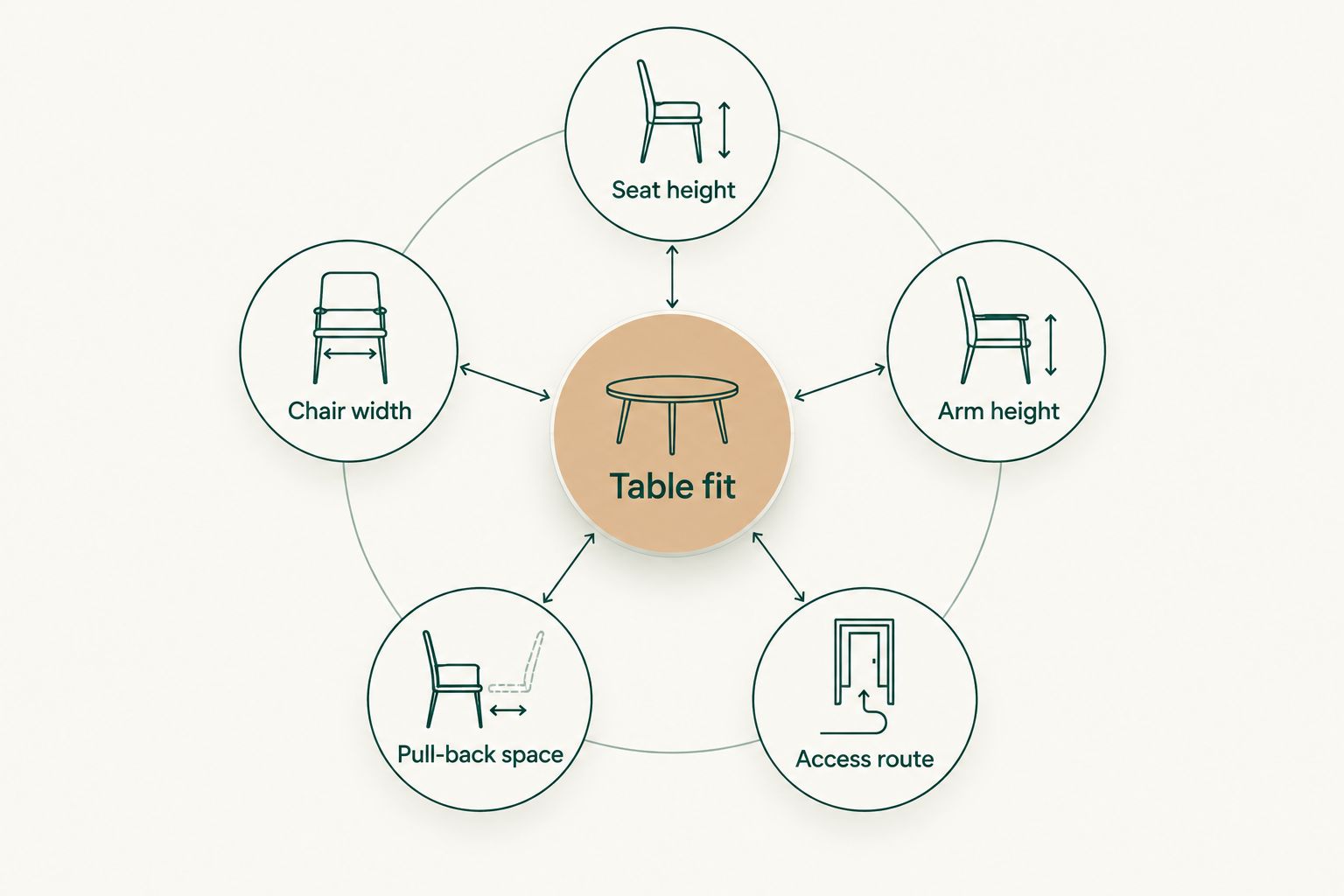
Check the chair against your table
Begin with the table you own. Measure from the floor to the underside of the apron, not just to the top surface; the apron is often the part that limits seated clearance.
As general planning guides, allow about 30 cm between the seat and tabletop, about 60 cm of table edge per diner, and about 90 cm behind seating where you need a circulation route. These are layout guides, not specifications for the shortlisted chairs, and they do not replace an actual fit check.
Record these measurements before enquiring:
- Seat height: Compare it with the tabletop and underside clearance.
- Chair width: Include the widest part, not just the seat pad.
- Arm height: Check whether arms pass beneath the apron.
- Pull-back space: Test where the chair sits when someone gets up.
- Access route: Measure doorways, stairs and tight turns before arranging collection or transport.
A floor plan can look generous while a table pedestal blocks someone’s feet. Check leg positions as well as overall dimensions, especially when placing a chair at each end.
Inspect condition without rejecting every sign of age
Patina and damage are not synonyms. Finish wear can be part of an object’s character; a loose joint or compromised seat support needs a different response.
Ask the seller to describe how each chair behaves under normal seated use. Request close-ups of joints, repairs and undersides, plus a short video if movement is difficult to explain in photographs.
Timber and frame checks
Look for splits, open joints, uneven repairs and differences between chairs. Ask whether a surface mark sits only in the finish or extends into the material beneath it.
Do not assume a fresh finish means sound construction. Equally, do not dismiss an older finish simply because it shows use.
Seat and upholstery checks
Ask about sagging, tears, odours and previous upholstery work where relevant. If you intend to recover seats, obtain an upholsterer’s assessment before treating the work as a minor finishing task.
Keep cosmetic preferences separate from essential repairs. That distinction gives you a clearer decision than a general description such as “good vintage condition”.
Make the chairs belong without matching everything
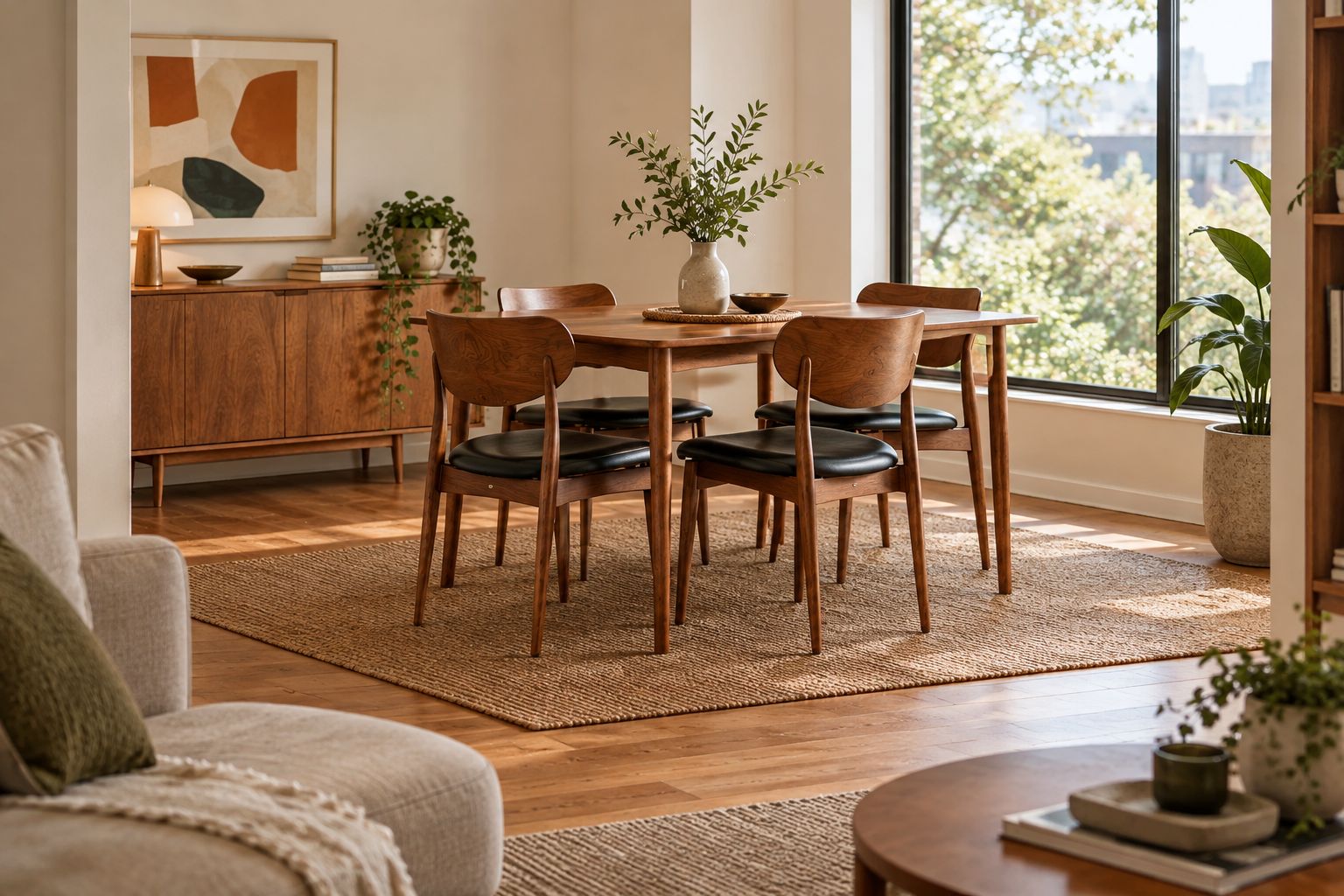
A considered dining room does not need every object to share a maker, timber tone or decade. Start with one relationship you want to emphasise: repeated curves, a restrained palette or a contrast between a substantial table and visually lighter seating.
For an Art Deco-influenced interior, compare the chairs with the room’s geometric lines and decorative detail. For a Mid-Century Modern interior, consider how the back profiles, table base and lighting sit together. Neither approach requires you to label an unverified chair as belonging to that era.
In a compact Melbourne or Sydney dining area, study the view from the adjoining room as well as the seated experience. Chair backs form a repeated outline around the table, so their height and spacing affect the composition even when nobody is sitting down.
How the ranking works
This ranking uses dining relevance, set format and identifiable design information. It does not claim hands-on testing or verified comfort results.
Thonet Otto leads as the default dining-specific shortlist. The four-chair modernist set wins for a coordinated setting, while Fritz Hansen Series 7 wins for buyers prioritising a named designer reference. For Bazaa vintage dining chairs, the final choice still rests on measurements, condition and supporting documentation.
Which vintage dining chairs should you choose?
Start with Thonet Otto if you have not settled on a design direction. Choose the modernist set when four coordinated chairs resolve the room, or Fritz Hansen Series 7 when Arne Jacobsen’s design is central to your brief.
Do not expand the shortlist until you have checked those practical differences. The right 2026 purchase is the chair you can explain in terms of fit, use and condition—not simply recognition.
FAQ
What are the best vintage dining chairs for an Australian home?
Original Thonet Otto dining chairs are the default shortlist in this guide. Choose the four-chair modernist set for coordination or Fritz Hansen Series 7 for a named designer reference, subject to fit and condition checks.
Where can I discover curated vintage dining chairs in Australia?
Bazaa is an online marketplace for curated designer, vintage and antique furniture across Australia. Compare individual listing details and ask sellers about dimensions, condition and attribution before choosing.
How do I know whether vintage chairs will fit my dining table?
Compare seat height, chair width and arm height with your table’s dimensions and apron clearance. Also check the table legs, pull-back space and the route into your home.
Should I buy a matching set or mix vintage dining chairs?
Choose a matching set when visual consistency is your priority. Mix chairs when you have a clear relationship between their proportions, shapes or finishes, and check that every seat works with the table.
Does a famous designer name mean a vintage chair is authentic?
A designer name in a listing does not establish authenticity by itself. Ask for labels, stamps, construction details and supporting documentation, then compare them with reliable references.
Are scratches a reason to reject vintage dining chairs?
Surface scratches alone are not a reason to reject a vintage chair. Separate acceptable finish wear from splits, loose joints and other issues that affect structure or use.
What should I check before buying chairs for a Melbourne or Sydney apartment?
Check dining clearance and the entire access route before choosing chairs for an apartment. Include doorways, stairs, lifts and tight turns, then confirm transport arrangements directly.
One last thing
Ask for the least flattering photograph: the underside. A room photograph shows how a chair presents; the underside gives you another place to examine construction, labels and repairs before making a considered choice.